Boy With Down Syndrome, 6, Finds an Unforgettable Friend
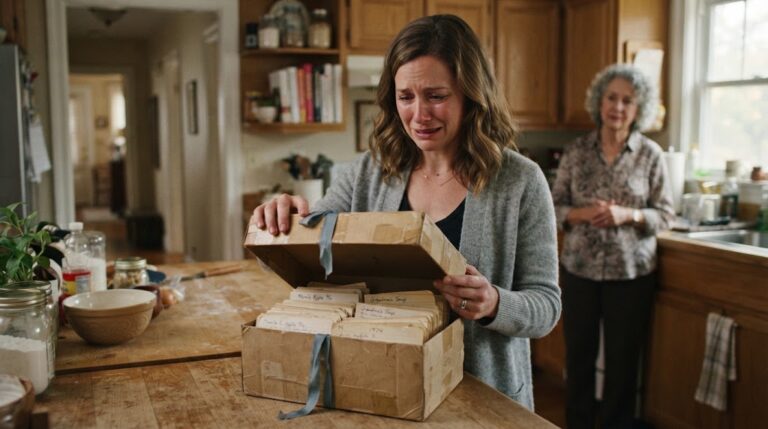
The call came at 11:17 on a Friday morning, and the principal’s voice gave nothing away. He only said that two police officers were in his office and that the parents of a 6-year-old boy with Down syndrome needed to come in right away. For Mrs. Parker, standing alone in her kitchen, those few seconds felt endless.
Her son, Ethan, a cheerful boy with Down syndrome, had been at regular school for exactly five days. Five days of smiles, new stories, and outfits laid out the night before. Now she had no idea what was waiting for her.
A Phone Call No Parent Wants
Principal Harris didn’t explain much. Ethan was safe, he said, but the police were there. When she asked what her son had done, he only told her he had worked in education for 23 years and had never seen anything quite like this.
Then he added one more instruction. She and her husband should come straight to his office and not talk to any other parents first. And with that, he hung up.
She called her husband, Michael, with shaking hands. Their boy with Down syndrome had only just started this new chapter. Ten minutes later, the two of them were rushing through the school’s front doors, their minds racing through every terrible possibility.
The Long Road to a Real Classroom
To understand why that call hit so hard, you have to know how far Ethan had come. For years, the family had chosen to homeschool him. He was curious, bright, and hungry to learn, but they worried a busy mainstream classroom might not meet the needs of a boy with Down syndrome.
A few weeks earlier, his doctor had suggested something new for their boy with Down syndrome. Ethan needed more chances to be around children his own age. He needed a chance to make friends.
Ethan was over the moon. For as long as his parents could remember, he had wanted friends more than anything. School felt like a door finally opening.
That first week seemed to prove everyone right. On Monday, he came home beaming and announced that he loved it. On Tuesday, he talked about a boy named Oliver who sat next to him.
On Wednesday, he proudly shared that some classmates had invited him to eat lunch with them. By Thursday, he was choosing his clothes for the next day without being asked. His parents started to believe their fears had been for nothing.
What Waited Inside the Principal’s Office
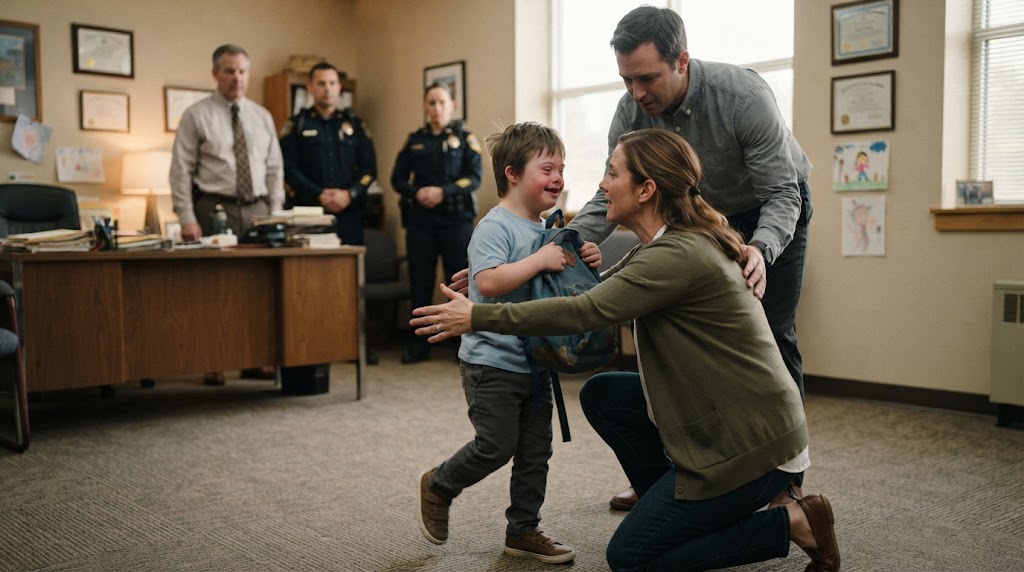
The secretary pointed them down the hall. When Michael opened the office door, they saw Ethan sitting by the window, holding his blue backpack tightly against his chest. His eyes were red from crying, and the boy with Down syndrome who had been so happy all week looked small and frightened.
He ran straight into his mother’s arms. When she asked if he was okay, he nodded. Then he whispered something that stopped her cold. He begged her not to make him leave school.
Two uniformed officers stood near the principal’s desk. One of them, Officer Miller, spoke first and told the family that their boy with Down syndrome was not in trouble.
The officers explained that they were school resource officers. Staff had called them when a confrontation in the cafeteria looked like it might turn physical. No one had been seriously hurt.
Michael wanted to know why none of this had been explained on the phone. Principal Harris looked down and admitted he should have been clearer. He apologized.
Then he said there had been an incident involving several students. Some children had been making fun of Ethan, and another student had stepped in.
The Video That Changed Everything
Mrs. Parker sat beside her son and gently asked what happened. Ethan twisted the strap of his backpack. Oliver got mad, he said. Not at Ethan, but at the boys at lunch.
Principal Harris set a tablet on his desk and played a short clip. It showed Ethan, the only boy with Down syndrome at the table, sitting in the cafeteria with three boys close by. One of them was holding up a phone and recording.
The boy kept pushing Ethan to repeat what he had said about becoming famous. Ethan, smiling a little uncertainly, said he was going to be a famous scientist. The boys burst out laughing.
They urged him to say it again, then louder. The phone moved closer to his face. Slowly, his smile faded, and he quietly said that he had already said it. Another boy started mimicking his voice.
Michael had to turn away from the screen. It was hard for any parent to watch a boy with Down syndrome have his biggest dream turned into a joke for someone’s phone.
Then Oliver walked into the frame. He told them to stop recording. One of the boys said they were only joking, and Oliver pointed out that Ethan wasn’t laughing.
Oliver wasn’t going to let anyone treat a boy with Down syndrome that way. Then someone shoved his shoulder. He pushed the hand away. A chair scraped loudly across the floor, and the recording cut off.
A Boy with Down Syndrome Who Hid His Pain
Ethan loved science more than almost anything. He could spend hours asking about stars, bugs, and how machines worked. Seeing that passion mocked felt unbearable to his parents.
When they asked how long this had been going on, Ethan admitted it had happened before. He counted on his fingers and said it began on Wednesday.
Wednesday. The same day he had come home so proud of his lunch invitation. His mother remembered hugging him and telling Michael how fast he was making friends. Now that happy memory looked completely different.
The parents asked for a moment alone with their son. Michael knelt in front of him and asked why he hadn’t said anything.
Ethan’s answer was simple. He liked school. Before his first day, his parents had told him that if school got too hard, he could always come home.
They had meant it as comfort, a reminder that he had choices. But this boy with Down syndrome had heard it differently. In his mind, admitting something was wrong might cost him the school he loved.
His mother promised they would never pull him out just because someone was unkind. She promised they would listen and figure out how to keep him safe. Ethan studied her face, then nodded.
“Because They Let Me”
When Michael asked about Oliver, Ethan’s face brightened. Oliver was his friend, he said. Oliver had told him those boys weren’t nice.
Ethan said he already knew. Sometimes they laughed when he talked. His mother’s eyes filled with tears, and she asked why he kept sitting with them anyway.
He told her it was because they let him. Coming from a boy with Down syndrome who only wanted to belong, the answer was heartbreaking. Those few words hurt more than anything in the video.
After years of wanting to belong, Ethan had accepted being laughed at because it meant having a seat at the table. Michael gently told him he deserved friends who were kind. Ethan answered that Oliver was. Michael agreed that he was.
Then Ethan shared something his parents hadn’t known. Oliver had been alone too.
Oliver had transferred to the school just two weeks earlier. On Monday, Ethan noticed him sitting by himself and asked if the empty chair beside him was free. They started talking about dinosaurs.
On Tuesday, the boy with Down syndrome invited his new friend to lunch. On Wednesday, when the other boys called Ethan over, he brought Oliver along. Oliver didn’t like them and suggested they sit somewhere else.
When his parents asked why he hadn’t moved, Ethan frowned and said he thought the boys might be nice tomorrow. He hadn’t been fooled. He had simply hoped they would change.
The Mistake the School Had to Own
Principal Harris returned with more to share. The trouble had started before that day’s video. Oliver had already reported the teasing to a lunch supervisor the day before.
The supervisor had talked to the boys, but she didn’t see how much the teasing was hurting a boy with Down syndrome. They told her everyone was just joking, and she reminded them to be respectful. She never passed the concern on to the teacher or the office. The next day, it happened again.
The principal admitted the school should have followed up and said they were addressing that failure. Mrs. Parker wanted to shout. Instead, she calmly asked what would change.
He explained that the school would document the bullying, meet with the students and their parents, and add more supervision at lunch. He also offered regular check-ins with Ethan’s teacher.
Mrs. Parker made it clear she didn’t want her son separated as if he were the problem. The principal agreed. Michael added that Oliver should not be punished for defending him.
That, the principal said, was another reason he had called.
The Friend Who Refused to Leave
At first, staff had sent Oliver to the office because they believed he had started the fight. But the video and other students confirmed that someone had pushed him first.
Oliver had also refused to apologize for telling the boys to stop. Mrs. Parker said that was good, and the principal agreed that he shouldn’t have to.
Oliver had insisted that Ethan be allowed to explain what happened without being interrupted. Ethan was scared, the principal said, so Oliver stayed right beside the boy with Down syndrome until they reached the office.
Ethan told his parents that Oliver said they should tell the truth. Ethan had told him he could go, but Oliver said friends don’t leave. Michael wiped his eyes.
Principal Harris said that in 23 years he had seen many children stand up for friends. What struck him was how hard these two fought to protect each other. Oliver didn’t want Ethan blamed, and Ethan kept begging the adults not to punish Oliver.
Suddenly, his parents understood the fear they had seen in their son’s eyes. This boy with Down syndrome wasn’t only afraid of losing school. He was afraid his friend would get in trouble because of him.
Officer Miller came back to confirm that neither boy had done anything that needed police action. The school would handle it. Before leaving, she knelt beside Ethan and told him he had done the right thing by telling the adults.
Ethan replied that Oliver had too. She smiled and agreed.
Choosing Courage Over Fear
The principal seemed surprised when Mrs. Parker asked if Ethan could go back to class. He asked whether they would rather take him home.
She turned to her son and asked what he wanted. He said he wanted to go back.
Every part of both parents wanted to take their boy with Down syndrome home and make sure no one ever laughed at him again. But they had spent years preparing him for moments like this. They couldn’t ask him to be brave and then ignore what he wanted.
Before he returned, they built a plan together. His teacher would check in with him every day. A staff member would be available at lunch. The other students would be dealt with separately, and the school would keep the family updated.
Ethan would be encouraged to speak up without feeling he had to fix everything himself. His mother also asked that Oliver get support without being expected to act as Ethan’s protector. He was a child too, she said.
The principal asked Ethan if there was anything he wanted the adults to understand. Ethan thought hard. He said he didn’t like it when they laughed at his words, and he wanted to sit with Oliver. The principal said both were important and could be arranged.
Then Ethan turned to his mother with one last question. Could he still be a scientist, even if he talked differently?
Michael knelt beside him and told him that talking differently doesn’t make his ideas any less important. Ethan considered that, said okay, and picked up his backpack. He announced he was going to science class.
His parents watched him walk down the hall with his teacher. His mother had never felt so proud and so scared at the same time.
Small Steps After a Big Day
That evening, Ethan showed them a magnet experiment using refrigerator magnets and a paper clip. For the first time all day, he sounded like the excited boy from Monday.
After dinner, though, he went quiet. He asked his mother if he could tell her something bad without having to leave school. She put down her dish towel and told him he always could.
He told her another boy had called him a baby the day before, a cruel word to throw at a boy with Down syndrome. It made him mad, and he had wanted to tell the boy he was six. Next time, he decided, he would tell his teacher. His mother said that was a good plan.
Over the next few weeks, the family stayed in close contact with the school, and Principal Harris kept his word. The lunch supervisor received more guidance. The boys involved faced consequences, and their parents were informed. The class talked about respect without singling Ethan out.
Not every day was easy for a boy with Down syndrome adjusting to a busy classroom. One afternoon, a classmate wouldn’t let him join a game. Another day, he struggled to finish an assignment as fast as the others.
His parents talked him through those moments instead of treating each hard day as proof that school wasn’t right for a boy with Down syndrome. His teacher gave him the support he needed while encouraging him to take part alongside everyone else.
How a Boy with Down Syndrome Helped His Friend Too
Oliver stayed his closest friend. One Friday, Oliver’s mother invited Ethan over to play. When Mrs. Parker came to pick him up, Oliver’s mom seemed nervous and said she had been wanting to thank her.
She explained that Oliver had struggled since changing schools. He had left his old friends behind and spent his first days eating alone. He had told her he didn’t think anyone would want to sit with the new kid.
Then Ethan asked him about dinosaurs. Oliver talked about it all evening.
Mrs. Parker had always thought of Oliver as the boy who rescued her son. She hadn’t realized how much the boy with Down syndrome had rescued Oliver in return. Their friendship began because two lonely boys chose to sit together.
The Space Station Moment
A month later, the school held a family science afternoon, and Ethan insisted his parents come. He and Oliver had made a solar system poster. Oliver drew the planets, and Ethan labeled them.
When his parents reached the table, their proud boy with Down syndrome welcomed them to the space station. A few nearby kids laughed, and his mother’s heart tightened.
But Ethan kept smiling and explained that it was the name of their project. Oliver pointed out that Ethan had come up with it.
As they presented, Ethan stumbled over a word while describing Saturn. He paused, took a breath, and tried again. Nobody interrupted. When he finished, Michael clapped, and Ethan grinned from ear to ear.
On the drive home, he asked if Oliver could visit the next weekend. Then he asked whether his mother thought he would have more friends someday. She told him she thought he would. He nodded and added that Oliver would always be his best friend.
The Lesson That Stayed
That night, after Ethan fell asleep, his parents sat together in the kitchen. They thought back to the fear of that Friday phone call.
The hardest discovery wasn’t that some children could be cruel. It was that their son had hidden his hurt because he was afraid of losing something he loved.
They had believed protecting a boy with Down syndrome meant keeping hard experiences away from him. Now they understood he needed something else. He needed to know they would listen, believe him, and help him face challenges without taking away his choices.
The next Monday, the boy with Down syndrome woke up before his alarm, got dressed, and hurried downstairs, worried they would be late. He told his mother that he and Oliver were starting a new project about dinosaurs. She laughed.
At the door, he turned around and promised that if anyone was mean that day, he would tell her. She knelt down and told him that was good, and that they would figure it out together. He hugged her and ran to the car.
What Every Parent Can Take From This
Five weeks earlier, a hopeful boy with Down syndrome had walked into school wishing someone would want to be his friend. He found one. Along the way, he taught his parents something they would never forget.
Their job was never to make his world so small that nothing could hurt him. It was to make sure he never had to face that world alone.
If you’re worried that your own child is being bullied, the U.S. government’s StopBullying.gov offers practical guidance for parents on spotting the signs and working with schools. For more heartfelt real-life stories like this one, visit Techtista.
So here’s a question worth sitting with. If your child was being bullied but begged to stay because he had finally found a real friend, would you take him out to protect him? Or, like the parents of this boy with Down syndrome, would you listen, stand beside him, and work with the school to help him stay?